
Guide · Kitchen
Grinding at home: choosing your first meat grinder
Manual or electric, what head sizes like #8 and #22 mean, how much power you need, and the cold, clean habits that matter more than the machine.
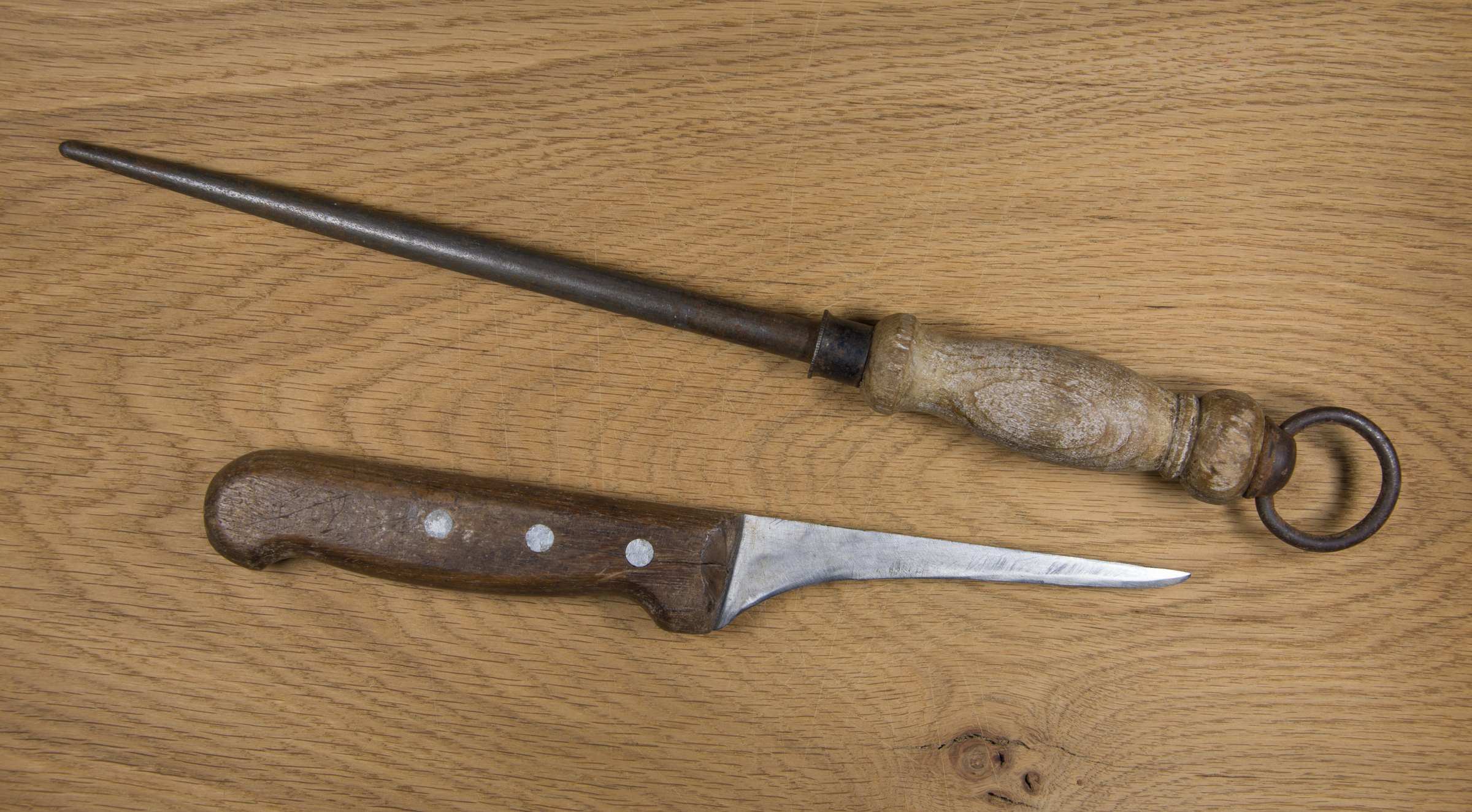
Photo: Hannes Grobe, CC BY-SA 4.0

A researched guide. We haven’t run these grinders ourselves yet. Specs come from the makers’ own pages and food-safety guidance from the USDA and Extension, all listed at the end. We have no paid relationship with any brand named here, and nothing on this page is a paid link.
Grinding your own meat means you choose the cut, the fat and the coarseness, and you know exactly what went in. It’s how a deer, a hog or a few roosters turn into burger, breakfast sausage and links for the freezer. The grinder you start with depends far less on brand than on two honest questions: how much meat will you grind in a session, and how often?
Manual or electric
Manual grinders clamp or bolt to a sturdy counter or table and turn with a hand crank. They’re quiet, need no power, take little space and cost the least. They’re also slow and take real effort, especially with sinew or partly frozen meat. A clamp-style model needs a thick, solid table edge to grip. For a few pounds at a time, or for a kitchen that values working without power, a good cast-iron or stainless hand grinder is a fair first choice.
Electric grinders do the work for you and handle big batches, which matters on processing day when the meat needs to stay cold and the job needs to get done. The trade-offs are price, weight, noise and storage space. The larger models are heavy: LEM lists its #22 at about 50 pounds and its #32 at about 57 pounds, and its 2024 catalog marks both as team lifts.
A stand-mixer grinder attachment sits between the two. It can work for occasional small batches if you already own the mixer. It probably isn’t the tool for a whole deer.
What the numbers mean: #5, #8, #12, #22, #32
Grinder sizes are named by a number that describes the size of the head and the plate. A bigger number means a bigger head, a wider throat and a larger plate, so more meat moves through with each turn. Plates and knives are matched to the head size, so a #12 plate won’t fit a #8 grinder.
LEM, a common name in home processing, publishes a simple ladder for its electric BigBite line in its 2024 catalog:
| Size | Motor | Rated output | LEM’s stated use |
|---|---|---|---|
| #5 | 0.35 HP | about 4 lb/min | Occasional |
| #8 | 0.5 HP | about 7 lb/min | Regular |
| #12 | 0.75 HP | about 11 lb/min | Frequent |
| #22 | 1 HP | about 13 lb/min | Heavy |
| #32 | 1.5 HP | about 17 lb/min | Professional |
Those are the maker’s ratings, not our measurements, and real throughput depends on how cold the meat is, how it’s cut and how much sinew is left in. Other brands use the same size numbers with their own motors.
A reasonable way to match size to use:
- A few pounds at a time, for burgers or a batch of sausage: a manual grinder, a mixer attachment or a small #5 or #8 electric.
- A deer or two a year, or a hog shared with family: a #8 or #12 electric is the usual middle ground.
- Several animals a season, or grinding for a group: a #22 or #32 saves real time, if you have the space and the help to lift it.
If you’re between sizes, think about the worst day of the year, not the average one. On processing day, a grinder that’s too small means meat sitting out longer while you wait.
Features worth checking
- Metal gears and a solid build. Look for all-metal gears and a motor with overload or circuit-breaker protection. LEM lists metal gears, roller bearings and a built-in circuit breaker on its BigBite models.
- Stainless steel versus aluminum. Stainless heads, augers, knives and plates resist corrosion. Aluminum is lighter and often cheaper. Whichever you choose, follow the maker’s cleaning instructions, especially for aluminum parts.
- Plates included. A coarse plate (LEM includes 3/8 inch) and a fine plate (3/16 inch) cover most home grinding. Extra plates are inexpensive later.
- Stuffing. Many grinders come with stuffing tubes and a stuffing plate. LEM includes these with its BigBite grinders and also sells separate vertical sausage stuffers. If you plan to make links often, compare the two approaches before you buy.
- Cord and power. LEM’s BigBite product pages list a 6-foot cord and advise against using an extension cord. Plan where the grinder will sit.
- Warranty and parts. A long warranty and easy-to-find replacement knives and plates matter more over the years than one more feature on the box.
Cold and clean matter more than the machine
The best grinder won’t fix warm meat or a dirty plate. These habits come straight from USDA and Extension guidance.
Keep everything cold. The USDA Food Safety and Inspection Service explains that grinding spreads any bacteria on the surface of the meat all through it, and that bacteria multiply quickly between 40°F and 140°F. Mississippi State University Extension says to keep meat at 40°F or lower during grinding and mixing, and to chill it to about 32°F to keep the fat from smearing. University of California Extension notes that meat grinds more easily when it’s slightly frozen. Chilling the head, auger, knife and plate in the freezer beforehand helps too.
Work in small batches. UC Extension suggests about 5 pounds at a time, keeping the rest refrigerated until you need it.
Grind in two steps for sausage. Mississippi State recommends a first grind through a 1/2- to 3/4-inch plate, mixing in seasoning, then a second grind through a 3/16-inch plate.
Mind the clock in warm weather. The USDA says perishable food shouldn’t sit out more than 2 hours, or 1 hour when it’s above 90°F, which is worth remembering on a Louisiana summer afternoon.
Clean and sanitize every part. Take the grinder apart, wash every piece that touched meat and sanitize. UC Extension gives a sanitizing solution of 1 tablespoon of bleach per gallon of water. Dry the parts fully before storing them.
Store and cook it right. The USDA advises refrigerating ground meat at 40°F or below and using it within 1 to 2 days, or freezing it. Cook ground beef, pork, lamb and other ground red meats to 160°F and ground poultry to 165°F, checked with a food thermometer.
The honest bottom line
For most small homesteads, a mid-size electric grinder (a #8 or #12) covers a deer or a hog without taking over the kitchen, and a hand grinder is a fine, inexpensive start if you grind only a few pounds at a time. LEM makes a clear, well-documented range, which is why we used its specs here. It isn’t the only good choice, and the habits above matter more than the badge on the motor.
Where to look next
Our Butchering & Processing shelf keeps a researched shortlist of grinders, a stuffer, a slicer and more, from a hand-crank model to electric. The Freezer & Food Storage shelf covers what comes next. Nothing there is linked yet.
Sources
- LEM Products: Meat grinders and Big Bite grinder technology
- LEM Products, specifications: #5 BigBite, 0.35 HP, #22 BigBite, 1 HP and #32 BigBite, 1.5 HP
- LEM Products: 2024 catalog (PDF)
- USDA Food Safety and Inspection Service: Ground beef and food safety
- USDA Food Safety and Inspection Service: Keep food safe! Food safety basics
- Mississippi State University Extension: Making sausage at home
- University of California Agriculture and Natural Resources: Making sausage at home (PDF)